
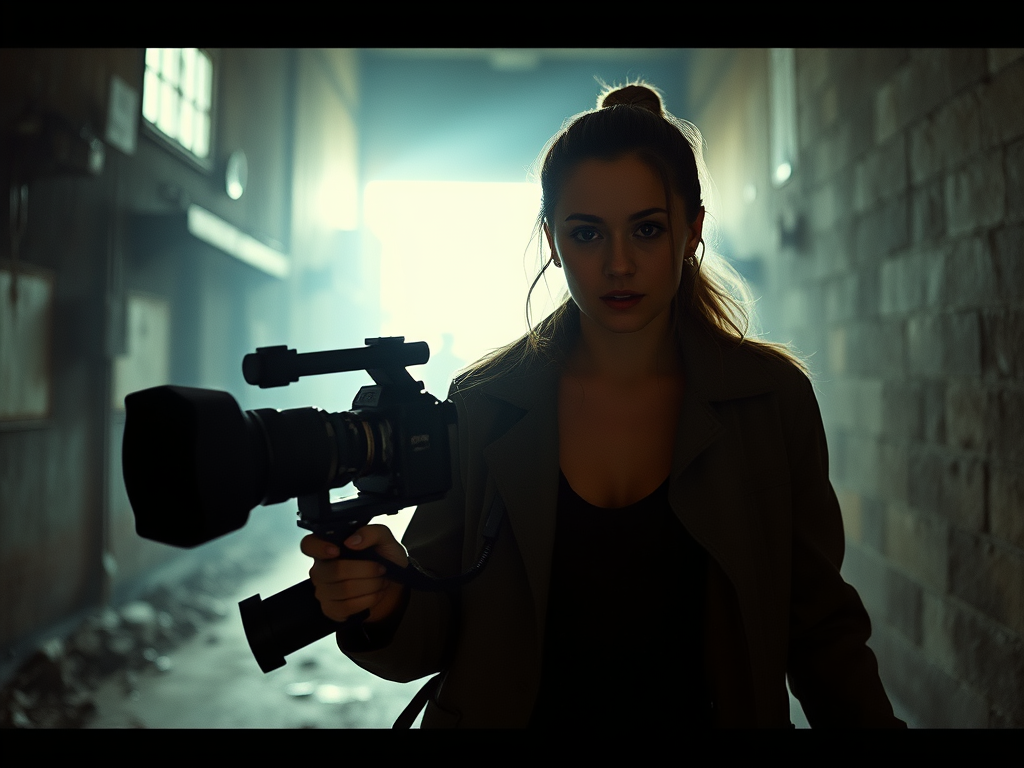
There’s something one would never associate with prison life and that is “creativity”. Strict routines, limited resources, and constant restrictions define daily existence behind bars. Yet inside HMP Downview, a women’s prison in London, one prisoner has challenged that perception through filmmaking.
Jess, who is currently incarcerated at HMP Downview, was involved in a film project developed entirely within the prison. Working under tight constraints, she helped bring the film from concept to completion in less than twelve weeks. Despite the limitations, the project went on to receive awards, marking a significant achievement for creative work produced behind bars.
It was a transformative experience for Jess. “The film made me come out of my comfort zone”, she says. “It helped me build my self-confidence.” Taking part in the project forced her to trust her abilities and step into responsibilities she had not previously taken on. “I had to believe in myself and keep going, even when things got difficult.”
The inspiration for the films story came from her nan. Drawing from real-life experiences made the project feel personal and authentic. “It wasn’t just an idea we made up,” Jess explains. “It came from something real, which made it more meaningful.”
Although filmmaking was central to the project, Jess describes herself as creatively diverse. “I’m not only into film,” she says. “I like fashion designing, and I’m into sewing.” These skills became particularly valuable during production, especially when the team faced problems with costumes. With limited access to materials, improvisation was essential. “We didn’t always have what we needed,” she explains. “So we had to work with what we had.”
Organisation and coordination were crucial to completing the film. Prison schedules allowed little flexibility, meaning every task had to be carefully planned. “Everything had to be organised,” Jess says. “There was no room for disorganisation.” However, despite planning, much of the production required on-the-spot decision-making. “A lot of the work had to be done in the moment,” she explains. “Things changed quickly, so you had to adapt.”
The production process came with several challenges. One of the biggest setbacks occurred when the main character initially dropped out of the project. “That was stressful,” Jess admits. “We had already planned so much around that role.” In addition, people not turning up for rehearsals or filming sessions caused delays. “When someone didn’t show up, it affected everyone,” she says.
Costume issues added further pressure. With limited resources, adjustments had to be made quickly, often without ideal materials. Jess’s sewing skills played a key role in solving these problems. “There was no option to stop,” she explains. “We just had to fix things and move forward.”
Despite these obstacles, the team remained determined. Completing the film in under twelve weeks required discipline, teamwork, and resilience. “It was intense,” Jess says. “But we were focused on finishing it properly.”
When the film received awards, the recognition was deeply meaningful. “It showed me that what we did mattered,” Jess says. Receiving acknowledgement while still incarcerated gave her a renewed sense of purpose. “You’re still in prison,” she explains, “but it reminds you that you’re capable of something positive.”
Jess is careful not to romanticise prison life. She acknowledges that creative projects do not erase the realities of incarceration. However, she believes filmmaking offered structure and focus. “It gives you something constructive to work towards,” she says. “It helps you grow, even in a place like this.”The experience also changed how she viewed herself. “It made me realise I can start something and finish it,” she explains. “That I can work under pressure and still succeed.”
Looking ahead, Jess remains ambitious. She plans to make another film about prison life in 2026, building on the skills and confidence she has gained. “I want to keep telling stories,” she says. “Stories people don’t usually hear.”
While she is still serving her sentence, Jess believes the skills she developed—organisation, coordination, creativity, and self-belief—will stay with her. Inside HMP Downview, an award-winning film has shown that talent and ambition can exist even within confinement.
“Making the film didn’t change where I am,” Jess says. “But it changed how I see myself.”
This piece is based on first-hand reporting and interviews conducted at HMP Downview and was written as a feature suitable for publication on UH Student News.
 UH Student News
Leave a comment